
work/research · sep 2026
the paper
i wanted to see how much the amount of data actually matters if you keep everything else the same. so i trained the same model four times on more and more of tinystories, and wrote it up.
train and val loss at the end of each run, lower is better
see the numbers
| data | stories | train loss | val loss |
|---|---|---|---|
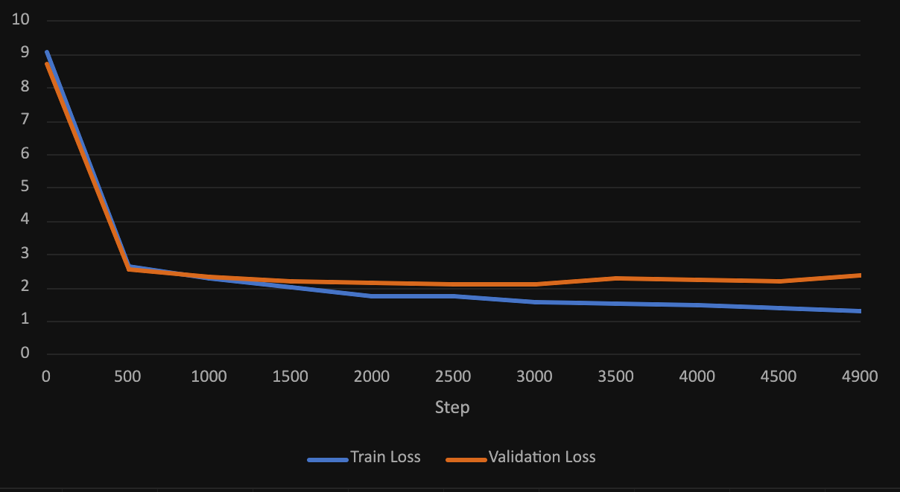
| 1% | 22k | 1.329 | 2.402 |
| 5% | 110k | 1.701 | 1.932 |
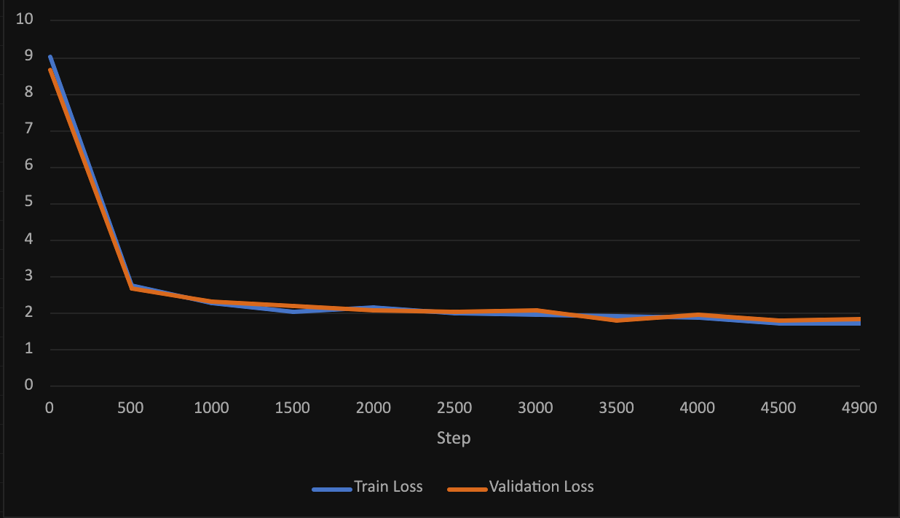
| 10% | 220k | 1.826 | 1.816 |
| 15% | 330k | 1.737 | 1.837 |
the setup
one model, lilstory, trained four times on 1%, 5%, 10% and 15% of tinystories. same size, same settings, 5000 steps each. the only thing that changes is how much it gets to read.
lower loss is better, and val loss is the one that matters, since its measured on stories the model never saw.
what happened
the 1% one had the best training loss and the worst val loss. it basically just memorised its 22k stories lol. the more data i gave it the smaller that gap got, and at 10% theyre pretty much the same.
the gap, val loss minus train loss
the weird one
15% was slightly worse than 10%, which i didnt expect. i think its because every model only got 5000 steps, so the 15% one probably never even got through all its data.
the difference is tiny too, 0.021, so it could just be noise.
read it
its on zenodo if you wanna read the whole thing: the effect of corpus size on the performance of a llm.
the page where all my models run in your browser.